



Best overall for recurrent dandruff: ketoconazole shampoo. Best for lifting stubborn scale: salicylic acid shampoo; best for a sensitive-scalp care routine rather than medicated treatment: Feuerstein Essentials. This 2026 guide explains where schwefel shampoo, or sulfur shampoo, fits—and why sulfur is not the same ingredient as selenium sulfide.
- Ketoconazole shampoo is the default choice for recurrent dandruff associated with seborrhoeic dermatitis.
- Schwefel shampoo means sulfur shampoo; selenium sulfide is a different dandruff ingredient.
- Salicylic acid shampoo loosens scale but does not replace antifungal treatment.
- Feuerstein Essentials offers sensitive-scalp haircare, not a documented sulfur or medicated dandruff treatment.
Why this matters
Choose a dandruff shampoo by its active ingredient, not by the word natural. Flakes can accompany dandruff, dry skin, contact irritation or scalp conditions that need a diagnosis. A shampoo that suits one problem does not automatically treat the others.
Dandruff and seborrhoeic dermatitis involve an interaction between scalp oils, Malassezia yeast and your skin's inflammatory response. Antifungal shampoos address the yeast component. Scale-removing ingredients help detach flakes, while ordinary cleansing products serve a different purpose.
Your first decision is therefore treatment versus routine care. Repeated greasy flakes with itch call for a different approach from irritation that began after a new hair product. Pain, weeping, marked redness or patchy hair loss belong with a healthcare professional, not a longer shopping list.
What makes the best dandruff shampoo in 2026?
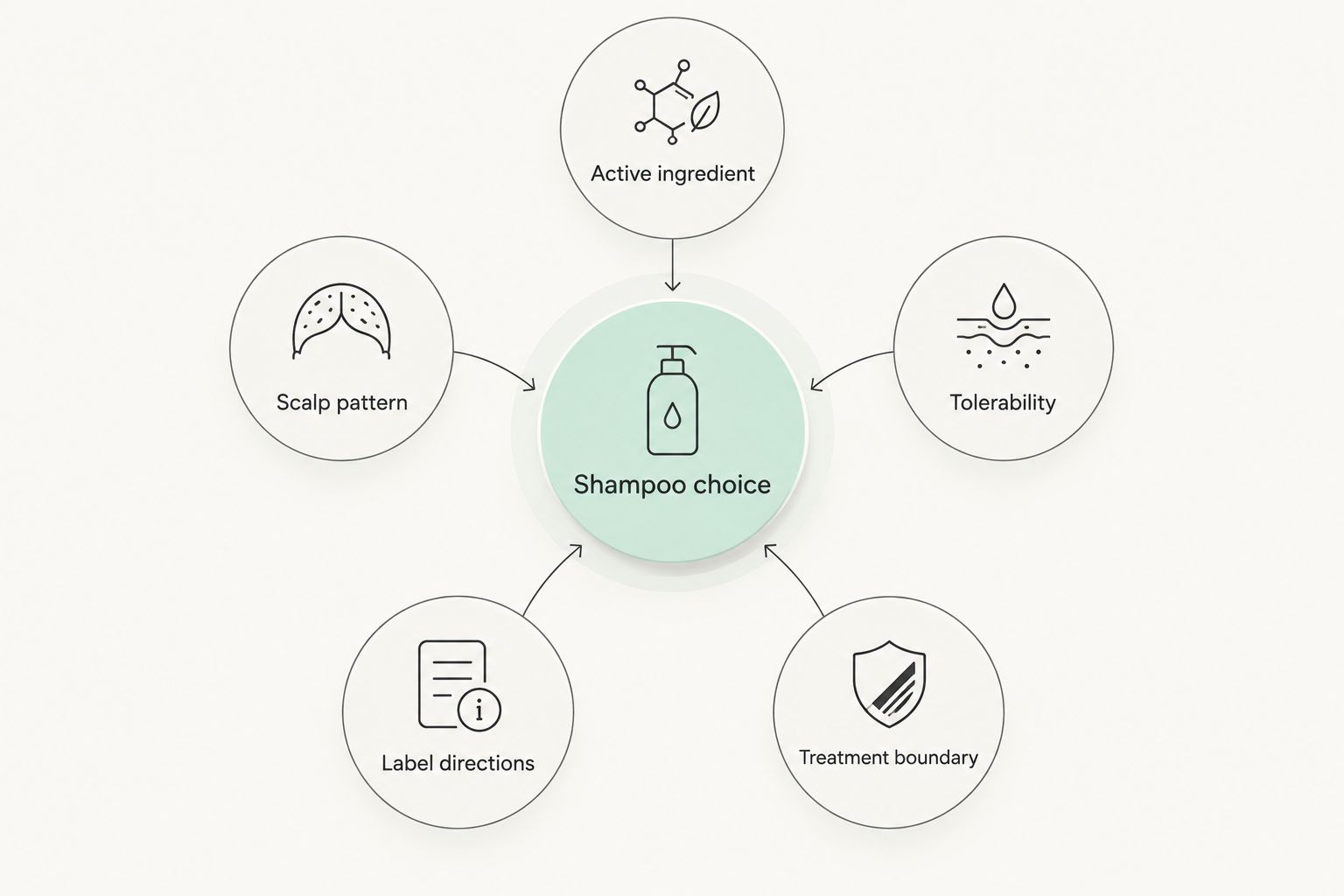
These criteria determine the ranking below. No option wins every category, and a pleasant washing experience is not evidence of dandruff control.
- Active ingredient: Look for the named treatment ingredient. Herbal ingredients alone do not establish antifungal activity or clinical dandruff control.
- Scalp pattern: Match recurrent dandruff, attached scale or sensitive-scalp routine care to the appropriate product type.
- Tolerability: Check the complete ingredient list, including fragrance and preservatives, against your known sensitivities.
- Label directions: Follow the product's contact time, frequency and restrictions. Different formulations are not interchangeable.
- Treatment boundary: Separate cosmetic care from treatment claims. A comfortable scalp routine does not prove that a product treats seborrhoeic dermatitis.
A dermatological test also needs context. The phrase does not, by itself, establish that a shampoo treats dandruff or that every person with sensitive skin will tolerate it. Read the actual claim rather than extending it.
Dandruff shampoos at a glance
This 2026 comparison ranks ingredient categories alongside a cosmetic care option. It is not a claim that every bottle containing the same ingredient performs identically.
| Rank and option | Best for | Standout feature | Key limitation |
|---|---|---|---|
| 1. Ketoconazole shampoo | Recurrent yeast-associated dandruff | Antifungal treatment | Requires treatment-specific directions |
| 2. Selenium sulfide shampoo | An alternative antifungal approach | Dandruff treatment ingredient | Handling and rinsing precautions depend on the formula |
| 3. Sulfur shampoo | A sulfur-based option recommended for your scalp | Helps loosen scale | Sulfur content alone does not establish treatment effectiveness |
| 4. Salicylic acid shampoo | Attached flakes and scale | Keratolytic action | Does not replace antifungal treatment |
| 5. Shampoo - Haarshampoo | Sensitive-scalp routine care | Described for sensitive, itchy and overstimulated scalps | No supplied sulfur or medicated dandruff claim |
1. Ketoconazole: best for recurrent yeast-associated dandruff
Ketoconazole shampoo is an antifungal treatment used for dandruff and seborrhoeic dermatitis. It belongs at the top when recurring flakes and itch fit that pattern, rather than simple dryness following harsh washing.
Best for: Recurrent dandruff associated with seborrhoeic dermatitis, with pharmacist or clinician guidance when needed.
Ketoconazole pros:
- Targets the fungal component involved in dandruff.
- Has established treatment directions for scalp use.
- Provides a treatment route rather than cosmetic cleansing alone.
Ketoconazole cons:
- Can cause irritation or changes in hair texture.
- Does not diagnose the cause of your flakes.
- Needs the correct application schedule rather than an ordinary quick wash.
NHS guidance for ketoconazole shampoo describes leaving it on for 3–5 minutes, then rinsing. For dandruff and seborrhoeic dermatitis, the guidance describes use twice weekly for 2–4 weeks. These are treatment directions, not a schedule for every anti-dandruff shampoo; follow your own leaflet.
Verdict — Buy: Choose ketoconazole when recurrent dandruff is the treatment target and the product is appropriate for you.
2. Selenium sulfide: best for an alternative antifungal approach
Selenium sulfide is a dandruff treatment ingredient with antifungal activity. It is chemically different from sulfur, even though searches and informal recommendations sometimes mix the names together.
Best for: People considering a different medicated dandruff ingredient with a pharmacist.
Selenium sulfide pros:
- Addresses the yeast-related component of dandruff.
- Offers a different active ingredient from ketoconazole.
- Comes with formulation-specific scalp treatment instructions.
Selenium sulfide cons:
- Can irritate the scalp.
- Some formulations carry precautions for coloured, bleached or chemically treated hair.
- Requires thorough rinsing and careful adherence to the label.
Do not substitute a selenium sulfide shampoo into a ketoconazole schedule from memory. Contact times and precautions belong to the actual product. If you colour your hair, read those instructions before application, not after noticing a change.
Verdict — Buy: Consider selenium sulfide as a distinct treatment alternative, not as another name for sulfur shampoo.
3. Sulfur shampoo: best for a specifically advised sulfur option
Sulfur is used in some skin preparations for its keratolytic and antimicrobial properties. In a shampoo, the full formulation matters: the presence of sulfur does not establish how effectively that bottle treats your particular scalp condition.
Best for: People whose pharmacist or clinician has recommended a sulfur-based preparation for their scalp.
Sulfur shampoo pros:
- Offers a scale-loosening ingredient.
- Has an established role in some topical skin preparations.
- Provides a distinct ingredient choice for people specifically seeking sulfur.
Sulfur shampoo cons:
- Its characteristic smell can make regular use unpleasant.
- Can cause dryness or irritation.
- Ingredient presence alone does not prove dandruff treatment effectiveness.
If your 2026 search is schwefel shampoo, read the ingredient list before buying. Sulfur, selenium sulfide and sulfate cleansing agents are different substances. A sulfate-free claim tells you nothing about whether a shampoo contains sulfur or treats dandruff.
Avoid homemade mixtures of sulfur powder and shampoo. Adding an ingredient yourself changes the formulation without establishing safe dispersion, concentration or skin tolerance.
Verdict — Hold: Choose sulfur shampoo for a clear formulation-specific reason, not because the search term sounds medicinal.
4. Salicylic acid: best for attached flakes and scale
Salicylic acid is a keratolytic ingredient: it helps loosen the bonds holding surface skin cells together. A scalp shampoo containing it can help remove attached scale, but scale removal and antifungal treatment are different jobs.
Best for: Attached flakes that need loosening as part of an appropriate scalp-care plan.
Salicylic acid pros:
- Helps lift adherent scale.
- Targets the visible buildup rather than relying on scrubbing.
- Has a clear role when scale removal is the immediate priority.
Salicylic acid cons:
- Can leave the scalp dry or irritated.
- Does not replace an antifungal treatment for yeast-associated dandruff.
- Needs extra caution on already irritated or broken skin.
Do not turn scale removal into exfoliation by force. Fingernails, stiff brushes and repeated scraping can injure the scalp. If scale remains thick or returns persistently, get the cause assessed instead of adding increasingly aggressive cleansing steps.
Verdict — Buy: Select salicylic acid for scale removal when that role fits your treatment plan; skip it as a universal dandruff cure.
5. Feuerstein Essentials: best for sensitive-scalp routine care
Feuerstein Essentials sells Swiss-made natural skincare and haircare with Engadine herbal ingredients. Its Shampoo - Haarshampoo description identifies sensitive, itchy and overstimulated scalps as the intended care audience; that is a cosmetic care positioning, not a documented sulfur or antifungal treatment claim.
Best for: People choosing a sensitive-scalp haircare routine while keeping dandruff treatment separate.
Shampoo - Haarshampoo pros:
- Is explicitly described for sensitive and itchy scalps.
- Includes a hair-care benefit described as suppleness and silky shine.
- Fits within a haircare range that also includes a shampoo-and-conditioner duet.
Shampoo - Haarshampoo cons:
- The supplied information does not establish a sulfur ingredient.
- The supplied information does not establish medicated dandruff treatment.
- Suitability for your sensitivities requires checking the complete ingredient list.
Feuerstein Essentials is best for sensitive-scalp haircare, not as a substitute for medicated dandruff treatment. Keep that distinction when comparing a cosmetic shampoo with an antifungal product.
The Hair Care Duet description also identifies dry, itchy or sensitive scalps and relief of tightness as its care focus. A conditioner supports a haircare routine; it is not an additional dandruff active merely because it appears in the same set.
Verdict — Buy: Choose this option for its stated care purpose. Skip it as a replacement for a prescribed or recommended scalp treatment.


How these options rank
The 2026 ranking prioritises a clear treatment role, then scalp fit, tolerability and usable directions. Ketoconazole leads for recurrent yeast-associated dandruff; selenium sulfide offers another antifungal route. Sulfur receives a narrower recommendation because the ingredient name is not enough to judge a finished shampoo.
Salicylic acid earns its position for scale removal. The cosmetic shampoo earns a separate care slot, not a claim of competing treatment effectiveness. This is a purpose-based comparison, not a hands-on product test or a clinical comparison of the named brand.
How to use your choice without confusing the result
A useful routine makes it possible to tell what helped and what irritated your scalp. Changing shampoo, conditioner, scalp serum and brushing technique together makes that harder.
- Check the pattern. Note whether flakes are loose or attached, whether your scalp is red, and whether symptoms followed a new product. These observations help a pharmacist or clinician assess the problem.
- Choose the role. Decide whether you need antifungal treatment, scale removal or routine cleansing. Do not expect one label to promise all three.
- Follow the leaflet. Apply a treatment shampoo to the scalp as directed, respect its contact time and rinse thoroughly. More frequent use is not automatically better.
- Keep care separate. Use conditioner according to its instructions. Do not assume that a hair mask or scalp brush increases a treatment shampoo's effectiveness.
- Review the response. Seek advice if the directed course does not help, symptoms worsen or the problem keeps returning. Stop using a product that causes a reaction.
For context, NHS ketoconazole guidance also describes maintenance use once every 1–2 weeks to help prevent recurrence. That instruction applies to ketoconazole, not to sulfur shampoo, cosmetic shampoo or every other dandruff treatment.
Which dandruff shampoo should you choose in 2026?
Choose ketoconazole as the default treatment option for recurrent yeast-associated dandruff, subject to the product's suitability and directions. Ask a pharmacist about selenium sulfide if you need an alternative. Choose salicylic acid when attached scale is the specific problem being addressed.
Sulfur shampoo needs a clearer reason than name recognition. Verify the formula and its intended use. For sensitive-scalp routine care, Feuerstein Essentials belongs in the cosmetic-care category; keep any necessary dandruff treatment as a separate decision.
If you cannot identify the problem, pause the ranking. A scalp diagnosis is more useful than another bottle chosen by review count, fragrance or packaging.
FAQ
What's the best shampoo for recurring dandruff?
Ketoconazole shampoo is the default treatment choice in this guide for recurrent yeast-associated dandruff. Follow its leaflet and seek professional advice if symptoms persist or the cause is uncertain.
What does schwefel shampoo mean?
Schwefel shampoo means sulfur shampoo. Check the ingredient list because sulfur, selenium sulfide and sulfate cleansing agents are different substances.
Is sulfur shampoo the same as selenium sulfide shampoo?
No, sulfur and selenium sulfide are different ingredients. Selenium sulfide is a dandruff treatment ingredient; a sulfur shampoo needs to be assessed by its own formulation and directions.
Can a natural shampoo replace medicated dandruff treatment?
A natural shampoo does not automatically replace medicated dandruff treatment. Herbal ingredients and natural positioning do not establish antifungal activity or clinical control of seborrhoeic dermatitis.
Does Feuerstein Essentials shampoo contain sulfur?
The supplied product information does not establish that Feuerstein Essentials shampoo contains sulfur. Its stated role is care for sensitive, itchy and overstimulated scalps, not a documented sulfur treatment.
How long should I leave ketoconazole shampoo on my scalp?
NHS guidance describes leaving ketoconazole shampoo on for 3–5 minutes before rinsing. Follow the instructions supplied with your own product because treatment directions are formulation-specific.
Should I scrub dandruff off with a scalp brush?
Do not scrape dandruff off an irritated scalp. Aggressive brushing can injure the skin, and a scalp brush does not replace antifungal treatment or assessment of persistent scale.
When should I get medical advice about scalp flakes?
Get medical advice for painful, weeping or markedly inflamed skin, patchy hair loss, or symptoms that persist despite correctly directed treatment. These signs need assessment rather than stronger scrubbing or repeated product changes.
One last thing
Sulfate-free is not a dandruff treatment category. Sulfates are cleansing ingredients; sulfur and selenium sulfide are different substances with different roles. That distinction prevents a common shopping mistake: choosing a shampoo for what it excludes instead of checking what it actually does.


