



Best overall: a soft-tipped manual scalp brush for gentle washing. Best for sensitive skin: fingertips. Best for removing loose flakes from curly lengths: a wide-tooth comb. For your 2026 shortlist, consider the Feuerstein Essentials scalp massage brush, but check its tip firmness and care instructions before choosing it.
- For schuppen bürste searches, choose gentle scalp contact rather than aggressive scraping; a brush does not treat dandruff.
- Feuerstein Essentials offers a scalp massage brush for shoppers choosing a dedicated scalp-care tool.
- Use fingertips on sensitive skin; use a wide-tooth comb to remove loose flakes from curly hair lengths.
- Persistent itching, redness or thick scale needs appropriate treatment, not a firmer brush.
Why this matters
A dandruff brush can help with washing and loose flakes, but it cannot address every cause of a flaky scalp. Dandruff, dry skin and other scalp conditions can look similar. Choose your tool for the task, not for a promise to cure the flakes.
What makes the best dandruff brush?
Use these criteria when comparing a schuppen bürste in 2026:
- Gentle contact: Tips should bend comfortably rather than scratch.
- Controlled handling: You should be able to guide the tool without pressing hard.
- Hair compatibility: The tool should reach the scalp without pulling your lengths.
- Easy cleaning: Choose a design you can rinse and clean according to its instructions.
- Clear limitations: A scalp-care tool is not a substitute for dandruff treatment.
Dandruff tools at a glance
These 4 approaches serve different jobs. The scalp brush is the dedicated washing option; the other choices solve sensitivity or hair-length problems.
| Option | Best for | Standout feature | Key limitation |
|---|---|---|---|
| Manual scalp massage brush | Controlled scalp washing | Direct access to the scalp during cleansing | Firm tips or excess pressure can irritate skin |
| Fingertips | Sensitive or easily irritated skin | Direct feedback about pressure and discomfort | Nails can scratch if you use them instead of finger pads |
| Wide-tooth comb | Loose flakes in curly or tangled lengths | Spaced teeth support section-by-section detangling | Does not treat flakes attached to the scalp |
| Rounded-tip detangling brush | Loose flakes in straight, untangled dry lengths | Brushes through hair rather than targeting scalp scale | Repeated brushing can pull hair or irritate the scalp |
1. Manual scalp massage brush: best for controlled scalp washing
A manual scalp brush is a dedicated tool for working around the scalp during washing. For dandruff care, its useful role is gentle cleansing—not scraping away every visible flake. Choose soft, flexible contact points and a shape you can control comfortably.
The Feuerstein Essentials scalp massage brush belongs in this category. Assess its published construction and use instructions against the same criteria as any alternative; the product name alone does not establish tip softness, material or suitability for irritated skin.
Manual scalp massage brush pros:
- Gives you a dedicated tool for scalp washing.
- Lets you work locally instead of dragging a brush through all your hair.
- Can suit a routine where you prefer a tool to finger massage.
Manual scalp massage brush cons:
- Adds a cleaning task to your routine.
- Can catch hair if you make large circular movements.
- Can irritate skin when the tips are firm or you press hard.
Best for: An intact, comfortable scalp and a washing routine that needs controlled contact.
Before choosing a brush, inspect 3 features: tip flexibility, grip control and access for cleaning. These are selection checks, not evidence that a particular brush treats dandruff. Reject a tool that feels scratchy even when you use light pressure.
Verdict: Buy a manual scalp brush for gentle washing; skip it as a dandruff treatment.
2. Fingertips: best for sensitive scalp contact
Your finger pads let you feel the scalp directly and adjust pressure immediately. They are the simplest starting point when a brush feels uncomfortable. Keep nails away from the skin and avoid rubbing areas that sting or look inflamed.
This option is deliberately included in a brush guide: sometimes the right purchase decision is not to add another tool. If ordinary gentle washing already feels uncomfortable, a different brush is not the next step.
Fingertips pros:
- Give immediate feedback about pressure and tenderness.
- Need no separate tool to clean or store.
- Let you work around sensitive areas without bristles catching hair.
Fingertips cons:
- Nails can scratch when technique slips.
- Forceful rubbing still irritates skin.
- Do not remove the need for appropriate dandruff care.
Best for: People who find brushing uncomfortable or want the least complicated washing method.
Use the pads of your fingers to distribute cleanser gently. Do not keep rubbing until the scalp feels completely free of texture; attached scale is not an instruction to increase force. If you feel pain, stop.
Verdict: Skip the brush when gentle fingertips are more comfortable.
3. Wide-tooth comb: best for loose flakes in curly lengths
A wide-tooth comb helps separate hair and remove flakes that have already detached from the scalp. Its job is in the lengths, especially where curls or tangles make repeated brushing a poor fit. It is not a tool for digging beneath attached scale.
Work through hair in sections, starting with tangles near the ends before moving higher. Keep the teeth from scraping your scalp. Follow your usual detangling method rather than switching to dry combing solely because you can see flakes.
Wide-tooth comb pros:
- Lets you detangle a section at a time.
- Separates lengths without a dense field of bristles.
- Helps distinguish loose flakes in hair from scale on the skin.
Wide-tooth comb cons:
- Does not cleanse the scalp.
- Can pull tangled hair if you force it through.
- Cannot address the cause of recurring dandruff.
Best for: Curly or tangled hair with loose flakes caught in the lengths.
The useful distinction is location. A flake resting on a strand is a hair-cleanup problem; a patch attached to red or tender skin is a scalp-care problem. Do not use the comb to turn the second problem into the first.
Verdict: Buy for detangling and loose-flake removal; skip scalp scraping.
4. Rounded-tip detangling brush: best for straight dry lengths
A rounded-tip detangling brush can move loose flakes through straight, untangled hair. Use it as a hairbrush, not as an exfoliating tool. Rounded ends do not make repeated rubbing over irritated skin safe.
Brush only as much as your hair needs for grooming. If you are repeatedly brushing the roots to make the scalp look clear, stop and address the scalp condition instead.
Rounded-tip detangling brush pros:
- Fits a familiar grooming routine.
- Can remove detached flakes from accessible hair lengths.
- Combines ordinary detangling with loose-flake cleanup.
Rounded-tip detangling brush cons:
- Bristles can pull when they meet tangles.
- Dense bristles need cleaning when flakes collect.
- Repeated root brushing can irritate the skin without treating dandruff.
Best for: Straight dry hair that already brushes comfortably.
Check the condition of the tips before use. Broken, rough or exposed ends are a reason to replace the tool, not to compensate with a lighter hand. Keep this brush away from sore patches.
Verdict: Buy for ordinary grooming; skip repeated brushing over flaky skin.
Match the tool to the location of the flakes
Before using any dandruff brush, identify where the flakes are. Loose material in your hair calls for a different response from scale attached to your scalp. This distinction matters more than the number of bristles or the size of the handle.
- Scalp washing: Use gentle finger pads or an appropriate soft scalp brush on comfortable, intact skin.
- Hair lengths: Use a comb or detangling brush that suits your hair texture.
- Irritated skin: Stop brushing sore areas and seek advice for persistent symptoms.
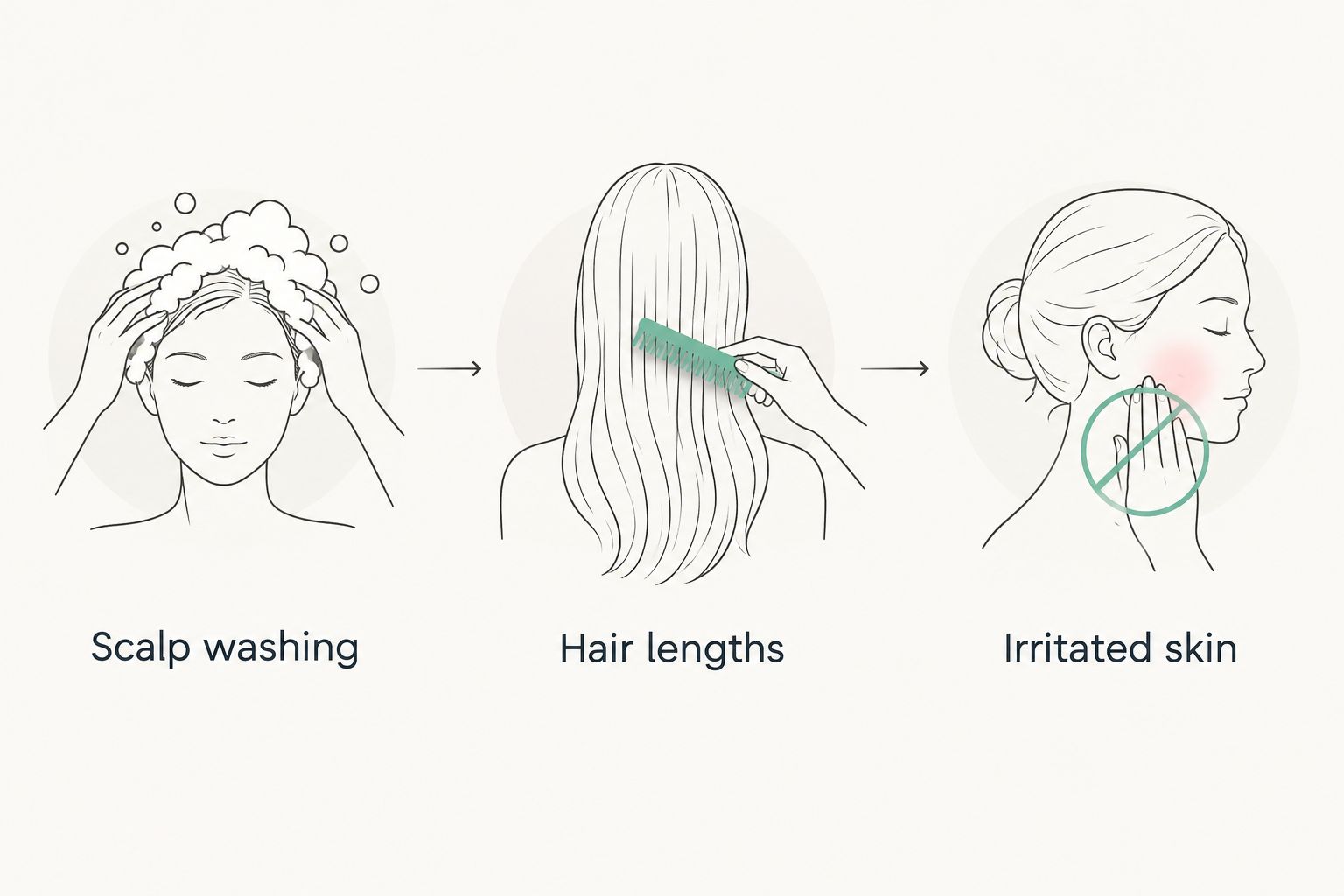
A visible flake is not proof that you need exfoliation. Dandruff is associated with scalp inflammation and Malassezia yeast, while other conditions also cause scaling. Removing the surface material does not establish that the underlying problem has improved.
How to use a scalp brush without turning washing into scraping
These 5 steps keep the tool in a supporting role. They are a practical sequence, not a treatment schedule; follow the cleanser's label and the brush manufacturer's directions.
- Inspect the scalp. Do not brush open, bleeding, painful or visibly inflamed areas. Check for tenderness before adding mechanical contact.
- Apply cleanser. Use your chosen shampoo as directed. A brush does not change the amount, application method or contact time specified on a treatment shampoo.
- Use light pressure. Work locally with short movements. Avoid sweeping circles that wind longer hair around the tips.
- Rinse thoroughly. Remove cleanser according to its directions. Do not keep brushing simply because some scale remains visible.
- Clean the tool. Remove trapped hair and residue, then clean and dry the brush according to its care instructions.
Stop if the brush causes stinging, pain or increased redness. Comfortable contact is the boundary; getting every flake off is not the goal.
Check the scalp brush details
Review the product information and compare it with the gentle-contact criteria above.
Pair the tool with appropriate scalp care
A cosmetic shampoo and an anti-dandruff treatment are not interchangeable categories. A shampoo can cleanse hair without treating the condition responsible for recurring flakes. Check the stated purpose and directions rather than assuming that botanical ingredients make it a dandruff remedy.
Feuerstein Essentials sells Swiss-made haircare with Engadine herbal ingredients. That background does not establish an anti-dandruff effect for its shampoo. Choose a cleanser for its stated use and your scalp's response, not for a treatment claim that the product does not make.
For persistent dandruff, ask a pharmacist or dermatologist about appropriate treatment. Seek medical advice for marked redness, pain, bleeding, thick adherent scale or patchy hair loss. A firmer brush is not an escalation in care.
Keep facial and body scrubs out of your scalp routine unless their instructions explicitly include scalp use. Products intended for another area are not automatically suitable beneath hair or on irritated skin.
How the 2026 ranking works
This ranking separates washing, sensitive-skin contact, curly-hair detangling and straight-hair grooming. It prioritizes gentle contact, control, hair compatibility and cleaning rather than unverified claims about circulation, hair growth or complete flake removal.
The Feuerstein Essentials scalp massage brush is a relevant dedicated-tool option, not a tested winner against named competitors. The category recommendation depends on checking the actual product details. A brush that does not meet the gentle-contact criteria should not win because of its label.
Which dandruff tool should you choose in 2026?
Choose a soft-tipped manual scalp brush if your goal is gentle washing on comfortable skin. Choose fingertips when tools feel irritating, a wide-tooth comb for curly lengths, and a rounded-tip brush for ordinary grooming of straight hair.
If flakes keep returning, separate the buying decision from the treatment decision. You can choose an appropriate grooming tool while still needing targeted scalp care. No position in this ranking changes that distinction.
FAQ
What's the best schuppen bürste in 2026?
A soft-tipped manual scalp brush is the default choice for gentle washing on intact, comfortable skin. Choose fingertips instead when brushing feels irritating, and check the actual brush's firmness and cleaning instructions before buying.
Does a dandruff brush get rid of dandruff?
A dandruff brush does not treat the underlying cause of dandruff. It can help with gentle washing or loose flakes, but recurring symptoms need appropriate scalp care.
Is the Feuerstein Essentials scalp massage brush suitable for dandruff?
The Feuerstein Essentials scalp massage brush is a dedicated scalp-care tool, not an established dandruff treatment. Check its product information for construction and use instructions, and avoid brushing painful or inflamed skin.
Should I use a dandruff brush on wet or dry hair?
Use a scalp-washing brush as its manufacturer directs, and use a comb or detangling brush according to your hair's grooming needs. Do not dry-scrub attached scale or change a treatment shampoo's instructions because you are using a brush.
Can I use a scalp brush every time I wash my hair?
There is no universal brushing schedule that suits every scalp. Follow the tool's instructions, use gentle contact and stop if you develop discomfort, stinging or redness.
Is a scalp brush better than a wide-tooth comb?
A scalp brush and a wide-tooth comb serve different purposes. The brush supports scalp washing, while the comb detangles lengths and removes flakes that have already detached.
What should I do if my scalp bleeds after brushing?
Stop brushing and seek medical advice for bleeding skin. Do not scrape the area again or treat bleeding as evidence that the brush is removing dandruff effectively.
One last thing
The best result is a comfortable scalp, not a perfectly flake-free brush. A brush full of flakes shows that material came away; it does not prove that the skin is healthier. In 2026, make comfort and appropriate treatment your decision criteria—not the amount you can scrape off.


