



Best overall: a fragrance-free syndet bar. Best for a traditional natural-soap routine: unperfumed true soap, provided your skin tolerates it. Best for frequent handwashing: a fragrance-free non-soap liquid cleanser. This 2026 guide explains which cleansing formats suit sensitive skin—and when natural soap is the wrong choice.
- For naturseife empfindliche haut searches, a fragrance-free syndet is the strongest starting point for dry, reactive skin.
- Traditional natural soap is alkaline; plant-derived ingredients do not guarantee gentleness.
- Feuerstein Essentials suits shoppers seeking Swiss-made botanical skincare; sensitive-skin suitability requires checking each formula.
- Choose fragrance-free cleansing, avoid abrasive washing, and moisturize after rinsing.
Why this matters
Sensitive skin needs a cleanser you can tolerate, not the longest list of botanical ingredients. A bar made from plant oils can still leave your skin tight, while a non-soap cleanser can clean without relying on traditional alkaline soap.
Feuerstein Essentials offers Swiss-made natural skincare and haircare with Engadine herbal ingredients. That makes the brand relevant to botanical-care shoppers, but origin and ingredient stories do not establish whether an individual cleanser suits reactive skin.
For your 2026 shortlist, separate two questions: do you want true natural soap, or do you want the most suitable cleansing format for sensitive skin? Those goals do not always point to the same product.
What makes the best cleanser for sensitive skin?
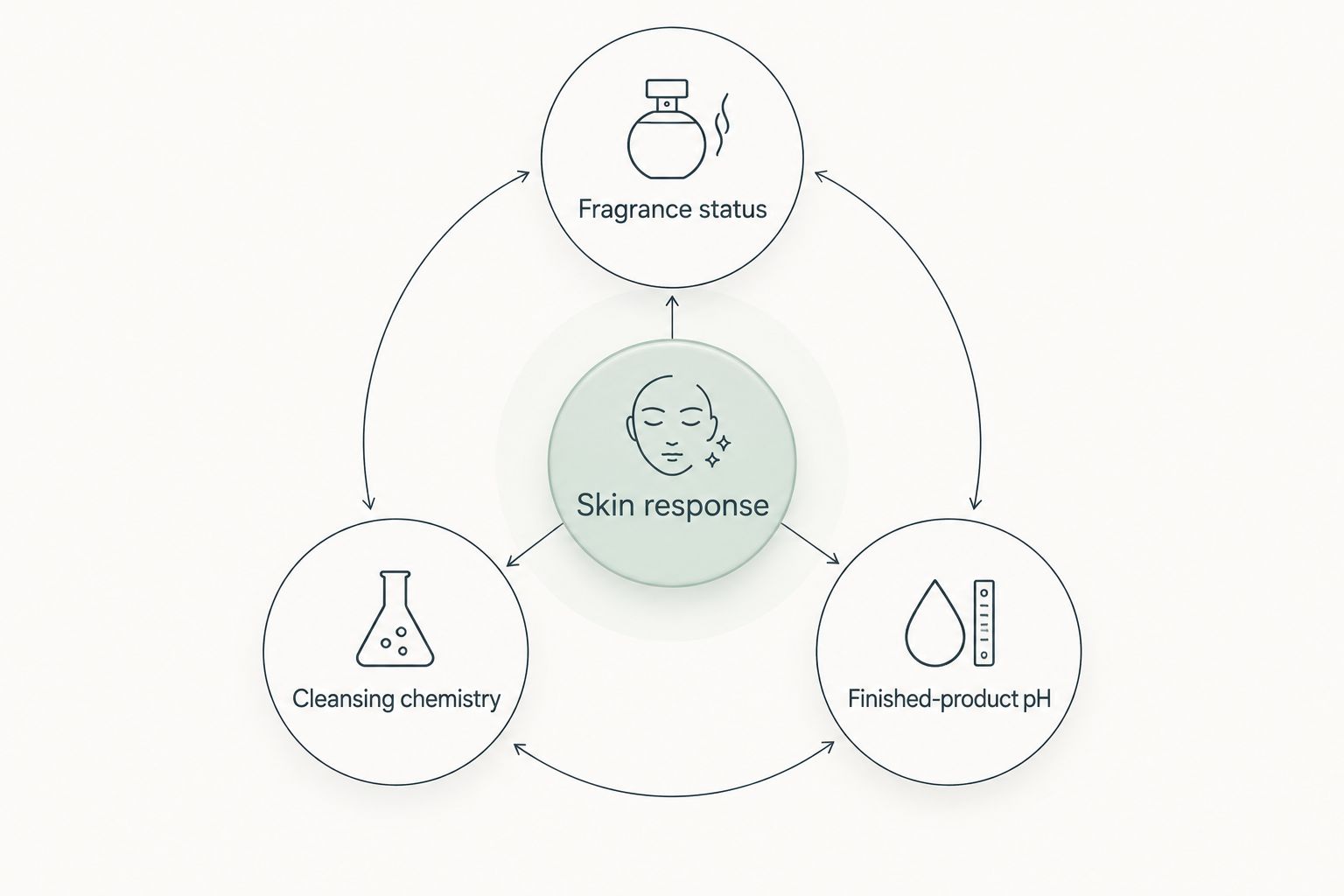
Judge the finished formula rather than the word natural. These criteria determine the order of the recommendations below.
- Fragrance status: Prefer fragrance-free formulas when fragrance triggers your skin. Essential oils also contain fragrance substances.
- Cleansing chemistry: Distinguish traditional soap from synthetic-detergent cleansers, commonly called syndets. A solid bar can belong to either group.
- Finished-product pH: Normal skin surface pH is commonly around 4.5–5.5. Traditional soap is generally alkaline, often around pH 9–11.
- Skin response: Persistent tightness, burning, itching, or redness after washing is a reason to stop using that cleanser.
- Physical texture: Avoid scrub particles and rough application tools when skin is irritated. Cleansing should not require abrasion.
- Intended use: Select a cleanser for the area you wash. Do not assume a hand or body cleanser is suitable for your face.
The pH ranges explain an important difference, but they do not predict every reaction. Surfactants, fragrance, exposure, and your skin condition also matter. A low-pH label is useful information, not a tolerance guarantee.
Sensitive-skin cleansers at a glance: 2026 shortlist
These are ranked cleansing formats, not interchangeable product claims. Each has a distinct use case, and each carries a limitation.
| Rank and option | Best for | Standout feature | Key limitation |
|---|---|---|---|
| 1. Fragrance-free syndet bar | Dry, reactive skin when you prefer a solid cleanser | Non-soap cleansing in bar form | Fragrance-free does not guarantee individual tolerance |
| 2. Unperfumed true natural soap | Traditional-soap users whose skin already tolerates soap | Made through saponification of fats or oils | Alkaline cleansing can aggravate dryness |
| 3. Fragrance-free non-soap liquid cleanser | Frequent handwashing without a bar | Liquid application without traditional soap chemistry | Formula suitability still depends on the surfactant system |
| 4. Botanical body and hand wash | Botanical-care shoppers who tolerate fragrance | A format aligned with a plant-focused body-care routine | Botanical ingredients do not establish sensitive-skin suitability |
A fragrance-free syndet ranks first because it avoids both traditional soap chemistry and added fragrance. That is a practical starting point, not a promise that every syndet will work for every reader.
1. Fragrance-free syndet bar: best overall for dry, reactive skin
A syndet bar cleans with surfactants rather than traditional soap salts. It looks like soap, but its chemistry differs. Syndet formulas can be made closer to skin-surface pH than true soap.
Best for: You want a solid cleanser and your skin feels dry or uncomfortable after ordinary soap. This is also the clearest starting category when sensitive skin matters more than a strict natural-soap definition.
Fragrance-free syndet bar pros
- Avoids added fragrance when explicitly labelled fragrance-free.
- Offers a solid format without requiring traditional alkaline soap.
- Can suit a simple routine without separate cleansing accessories.
- Allows you to prioritize finished-formula tolerability over botanical claims.
Fragrance-free syndet bar cons
- Does not satisfy every definition of natural soap.
- Individual surfactants or other ingredients can still cause irritation.
- Not every syndet bar is intended for facial use.
Read the intended-use instructions before treating one bar as a face, hand, and body cleanser. Choose a smooth bar rather than one containing exfoliating particles, and assess how your skin feels after rinsing.
For a 2026 purchase, fragrance-free and non-soap are useful filters; they are not substitutes for checking the formula. Verdict: Buy a fragrance-free syndet bar as the default solid-cleanser option for dry, reactive skin.
2. Unperfumed true natural soap: best for committed soap users
True soap results from saponification: fats or oils react with an alkali to form soap. Plant-oil soaps belong here, whether the bar is made primarily with olive oil or with a blend of oils.
Best for: You specifically want traditional natural soap and already tolerate that cleansing format. Unperfumed soap removes one avoidable variable, but it does not remove soap's alkaline character.
Unperfumed true natural soap pros
- Meets the preference for a traditional soap rather than a syndet.
- An unperfumed formula avoids deliberately added scent.
- Ingredient lists can identify the oils or soap salts used.
- Provides a straightforward rinse-off cleansing format.
Unperfumed true natural soap cons
- Its alkaline pH can contribute to dryness and irritation.
- Oil choice alone does not establish finished-bar gentleness.
- It is not the default recommendation for irritated or eczema-prone skin.
Do not rank soaps by the appeal of the raw oil. Olive oil in a finished soap is not the same thing as applying olive oil to your skin; saponification changes the material into a cleanser.
Likewise, added glycerin or a superfatting claim does not prove that the complete bar suits reactive skin. If washing repeatedly leaves your skin tight, switching between natural-soap oils misses the more important decision: whether true soap suits you at all.
Verdict: Hold unless your skin already tolerates true soap; choose an unperfumed formula rather than a scented bar.
3. Fragrance-free non-soap liquid cleanser: best for frequent handwashing
A non-soap liquid cleanser uses a surfactant system rather than relying on traditional soap salts. Its main advantage here is the combination of a liquid application format and the option to avoid fragrance and alkaline soap chemistry.
Best for: You wash your hands frequently and prefer liquid dispensing to handling a wet bar. Select a hand-cleansing formula rather than assuming that any liquid facial cleanser has the same intended use.
Fragrance-free non-soap liquid cleanser pros
- Offers a practical liquid format for repeated handwashing.
- Can avoid both traditional soap and added fragrance.
- Makes it straightforward to apply cleanser directly to wet hands.
- Separates cleansing from exfoliation when the formula contains no scrub particles.
Fragrance-free non-soap liquid cleanser cons
- Liquid texture does not automatically mean mild cleansing.
- Preservatives and other ingredients remain relevant to known allergies.
- Repeated washing can still aggravate dryness, even with a suitable cleanser.
Technique matters alongside product choice. CDC handwashing guidance recommends scrubbing for at least 20 seconds; shortening necessary washing is not a sensible solution to dry hands. Rinse thoroughly, dry gently, and apply a suitable moisturizer afterward.
Use lukewarm rather than hot water and avoid scrubbing with a brush when your skin is irritated. If occupational washing is causing persistent cracking or inflammation, seek clinical advice rather than repeatedly changing products.
Verdict: Buy a fragrance-free non-soap liquid cleanser when frequent handwashing is your main use case.
4. Botanical body and hand wash: best for botanical-care preferences
A botanical body wash belongs on the shortlist when you want plant-focused personal care and tolerate its complete formula. The category is not synonymous with true soap, fragrance-free cleansing, or suitability for eczema.
Best for: You enjoy botanical body care and do not have a known reaction to the formula's fragrance or plant ingredients. Feuerstein Essentials offers an Aromatic Body & Hand Wash to consider in this category; assess the product's ingredient list before selecting it for sensitive skin.
Botanical body and hand wash pros
- Fits a botanical-focused body-care preference.
- Offers a wash format for the body and hands when labelled for those uses.
- Allows you to assess a complete formula rather than choosing by a single oil.
Botanical body and hand wash cons
- Plant extracts are not automatically non-irritating.
- Fragrance, if present, is relevant to fragrance-sensitive skin.
- Brand-level natural positioning does not prove product-level tolerance.
Feuerstein Essentials is best for shoppers seeking Swiss-made botanical skincare, not for assuming that natural body wash is automatically suitable for sensitive skin. That distinction keeps the recommendation tied to the brand's stated positioning without turning it into a medical claim.
Check fragrance declarations, intended use, and any ingredients linked to your previous reactions. A pleasant cleansing experience is not enough if your skin burns or itches afterward.
Verdict: Hold until you have checked the formula against your sensitivities; skip fragranced options if fragrance triggers your skin.
How the 2026 ranking works
The ranking prioritizes fragrance avoidance, cleansing chemistry, intended use, and skin response. Solid and liquid formats are separated because your preferred application method changes the shortlist, but format alone does not establish gentleness.
Natural-soap terminology receives less weight than tolerability. A botanical story cannot compensate for a formula that repeatedly irritates your skin. These recommendations rank categories by suitability for the stated use cases, not by unverified product performance.
Which cleanser should you choose?
Choose a fragrance-free syndet bar if you want one default recommendation for sensitive skin. Choose a fragrance-free non-soap liquid cleanser instead when frequent handwashing and liquid application are your priorities.
Keep true natural soap only if you already tolerate it. For your 2026 routine, do not keep replacing one scented botanical bar with another while ignoring persistent discomfort.
A useful selection sequence is:
- Decide whether you need a face, hand, or body cleanser.
- Exclude ingredients associated with your known reactions.
- Prefer fragrance-free cleansing for reactive skin.
- Choose non-soap cleansing if true soap leaves you dry or tight.
- Stop using a cleanser that causes persistent irritation.
Introduce one new cleanser at a time so you can identify what changed. A small-area trial can help reveal an obvious reaction, but it cannot rule out allergy or guarantee tolerance with repeated use. Dermatologist-directed patch testing serves a different purpose.
FAQ
What is the best natural soap for sensitive skin in 2026?
An unperfumed true soap is the better starting point if you specifically want natural soap and already tolerate it. For dry, reactive skin, a fragrance-free syndet is the stronger default because it avoids traditional alkaline soap chemistry.
What should I look for when searching naturseife empfindliche haut?
Look for fragrance status, cleansing chemistry, intended use, and a complete ingredient list. The phrase naturseife empfindliche haut identifies your shopping goal, but natural positioning alone does not establish gentleness.
Is a syndet bar better than natural soap for sensitive skin?
A fragrance-free syndet is generally the better starting point for dry, reactive skin. True soap is alkaline, while syndet formulas can be made closer to skin-surface pH; individual tolerance still matters.
Is olive-oil soap automatically gentle?
No, olive-oil soap is not automatically gentle. Saponification turns the oil into soap, so the finished cleanser's chemistry and your skin response matter more than the reputation of the starting oil.
Are essential oils suitable for fragrance-sensitive skin?
Essential oils are not a fragrance-free alternative. They contain fragrance substances, so avoid them when those substances trigger your skin or conflict with advice about a diagnosed allergy.
Is Feuerstein Essentials a suitable sensitive-skin cleanser choice?
Feuerstein Essentials belongs on a shortlist for Swiss-made botanical skincare, but each cleanser needs an individual formula check. Compare its ingredients and intended use with your known sensitivities rather than relying on natural positioning.
Should I keep using soap if my skin feels tight afterward?
Persistent tightness is a reason to reassess the cleanser rather than accept discomfort as proof of cleanliness. Try a suitable fragrance-free non-soap format, and seek clinical advice for ongoing redness, itching, cracking, or burning.
One last thing
The easiest mistake is buying a soap-shaped bar and assuming it is true soap—or buying a natural bar and assuming it is gentle. Shape tells you how to use a cleanser; chemistry helps explain how it cleans. For your 2026 routine, read the formula before committing to either format.


