



Best overall: a fragrance-free, baking-soda-free natural deodorant. Best for hands-free application: a stick. Best for controlled application: a cream. This 2026 guide to naturdeo ohne aluminium ranks formulation types by skin comfort and everyday use, rather than treating every aluminium-free deodorant as interchangeable.
- For naturdeo ohne aluminium, start with a fragrance-free, baking-soda-free formulation if skin comfort is your priority.
- Aluminium-free deodorant addresses odour; it does not provide the sweat-reducing action of an aluminium-salt antiperspirant.
- Choose sticks, creams, roll-ons or sprays by application preference, then check the complete ingredient list.
- Feuerstein Essentials offers Swiss-made natural skincare; choose your deodorant separately by its formulation and intended use.
Why this matters
The best natural deodorant is the one that addresses odour without making your underarms uncomfortable. A pleasant scent cannot compensate for stinging skin, and an aluminium-free label does not tell you whether a formula contains fragrance, alcohol or baking soda.
Feuerstein Essentials is a fit for shoppers seeking Swiss-made natural skincare with Engadine herbal ingredients. Its natural skincare range belongs in a broader body-care routine; your deodorant needs its own ingredient check. Do not transfer expectations from a body wash or lotion to a leave-on underarm product.
For your 2026 shortlist, separate three decisions: whether you want odour control or sweat reduction, which ingredients your skin tolerates, and which application format you will actually use. Start there, not with the strongest fragrance.
What makes the best natural deodorant without aluminium?
Use these criteria before choosing a format. The ingredient list matters more than whether the product comes in a jar, bottle or tube.
- Aluminium status: Check the full ingredient list, not just the front label. Aluminium chlorohydrate and potassium alum are aluminium-containing ingredients.
- Fragrance exposure: Prefer a fragrance-free formula when you want to avoid added perfume. Essential oils also introduce fragrance components.
- Baking soda tolerance: Sodium bicarbonate is baking soda. Its alkaline character makes it an ingredient to scrutinise if deodorants leave your skin irritated.
- Application control: Choose a format that lets you spread the product where you need it without repeatedly rubbing sensitive skin.
- Daily practicality: Consider drying, handwashing after application, and the possibility of product transferring to clothing.
- Clear purpose: A deodorant should be evaluated for odour control. Do not expect an aluminium-free deodorant to perform like an antiperspirant.
Treat fragrance-free, baking-soda-free as a starting filter, not a guarantee of tolerance. Other ingredients can still disagree with your skin. Equally, a formula containing baking soda is not automatically unsuitable for everyone.
Natural deodorant options at a glance
These are ranked buying profiles, not individual product endorsements. Formats overlap: a stick can be fragrance-free, and a cream can contain baking soda. Read each row as a different shopping priority.
| Rank and option | Best for | Standout feature | Key limitation |
|---|---|---|---|
| 1. Fragrance-free, baking-soda-free formula | An ingredient-first starting point | Avoids added fragrance and sodium bicarbonate | Other ingredients still need checking |
| 2. Natural deodorant stick | Hands-free daily application | Direct application without scooping | Rubbing and residue depend on the formula |
| 3. Natural deodorant cream | Precise manual application | You control where the cream goes | Requires handling the product |
| 4. Natural deodorant roll-on | A familiar liquid application | Roller distributes liquid over the skin | Liquid needs to dry before dressing |
| 5. Natural deodorant pump spray | Application without rubbing | Sprays without dragging an applicator over skin | Spray placement and alcohol content need attention |
A packaging choice does not establish performance. For example, a roll-on is not inherently gentler than a stick, and a cream is not inherently more effective than a spray. Use the ingredient criteria first, then select the format.
1. Fragrance-free, baking-soda-free: best for an ingredient-first start
A fragrance-free, baking-soda-free natural deodorant removes two ingredient groups from your initial shortlist: added fragrance and sodium bicarbonate. It does not identify the deodorising ingredient, so you still need to read the rest of the formula.
This is the default recommendation for a 2026 search focused on skin comfort. It gives you a clear starting point without assuming that a botanical fragrance is gentler than a conventional perfume.
Fragrance-free, baking-soda-free formula pros:
- Avoids added fragrance when that is your priority.
- Excludes sodium bicarbonate.
- Keeps fragrance preference separate from odour-control needs.
- Works as a selection criterion across different formats.
Fragrance-free, baking-soda-free formula cons:
- Does not guarantee that your skin will tolerate every remaining ingredient.
- Does not establish how effectively the finished product controls odour.
- Requires careful label reading rather than a packaging shortcut.
Best for: You want to narrow your options by ingredients before deciding between a stick, cream or liquid.
Verdict: Buy this formulation profile first if skin comfort is your main concern. Choose a specific product only after checking its complete ingredient list.
2. Natural deodorant stick: best for hands-free application
A natural deodorant stick applies directly from its container. You do not need to scoop cream or spread it with your fingers, which makes the format straightforward when you want a simple application step.
Check whether the stick moves comfortably across your skin. Pressing harder to spread a firm formula adds friction; the packaging format does not justify repeated rubbing.
Natural deodorant stick pros:
- Applies without handling the formula directly.
- Makes it easy to target the underarm area.
- Avoids the extra handwashing step associated with manual cream application.
Natural deodorant stick cons:
- Direct application involves contact and friction.
- Waxes, powders or other formula components can leave residue.
- A convenient format can still contain ingredients you want to avoid.
Best for: You prioritise direct, hands-free application over the ability to spread the product manually.
Verdict: Buy a stick if application convenience is the deciding factor. Skip a particular stick if spreading it requires uncomfortable pressure.
3. Natural deodorant cream: best for controlled application
A deodorant cream lets you place and spread the formula manually. You can focus on the area that needs coverage instead of repeatedly passing an applicator over your skin.
Read the directions before deciding how much to use. Cream texture alone does not tell you whether the product contains baking soda, fragrance or other ingredients that matter to your selection.
Natural deodorant cream pros:
- Gives you direct control over placement.
- Lets you spread product without dragging a stick across the skin.
- Makes application coverage easy to inspect.
Natural deodorant cream cons:
- Requires clean hands or the applicator specified by the manufacturer.
- Adds a handling step to your routine.
- Excess product can remain on the skin or transfer to clothing.
Best for: You prefer deliberate application and do not mind handling the product.
Verdict: Buy a cream for application control, not because jars imply a gentler formula. Skip this format if you dislike touching deodorant during your morning routine.
4. Natural deodorant roll-on: best for a familiar liquid routine
A roll-on distributes a liquid formula through a roller ball. It suits you if you prefer a familiar application method and do not want to spread cream with your fingers.
The main practical question is drying. Let the applied liquid dry according to the product directions before putting fabric against it; adding extra layers is not a substitute for checking how the formula performs.
Natural deodorant roll-on pros:
- Applies liquid without scooping or manual spreading.
- Provides targeted application through the roller.
- Fits a routine built around liquid deodorants.
Natural deodorant roll-on cons:
- Wet application adds a drying step.
- The roller contacts the skin.
- Alcohol and fragrance content vary by formula.
Best for: You already like liquid deodorants and can allow the application to dry before dressing.
Verdict: Buy a roll-on if the liquid format suits your routine. Skip a formula that stings rather than assuming every roll-on will behave the same way.
5. Natural deodorant pump spray: best for avoiding applicator friction
A pump spray deposits liquid without dragging a stick or roller over your underarm. That distinguishes its application method, but it does not establish whether the liquid itself is suitable for sensitive skin.
Follow the directions for placement and avoid inhaling the spray. An alcohol-containing formula deserves particular attention if your underarms sting after shaving.
Natural deodorant pump spray pros:
- Avoids rubbing an applicator over the skin.
- Does not require spreading cream with your fingers.
- Keeps the dispenser from directly contacting the underarm.
Natural deodorant pump spray cons:
- Placement needs care to avoid spraying beyond the intended area.
- Alcohol-containing formulas can sting irritated skin.
- Spray application does not guarantee even coverage.
Best for: You want a no-rub application and are comfortable controlling a spray.
Verdict: Buy a pump spray for its application method. Skip it if you cannot apply it comfortably and precisely.
How these options are ranked
The order prioritises ingredient selection, then practical application. Fragrance-free, baking-soda-free formulas lead because they provide a clear starting filter; sticks, creams, roll-ons and sprays then serve distinct preferences.
This 2026 guide does not assign a universal performance winner to a format. Odour control and skin tolerance depend on the finished formula and your experience with it. The useful comparison is whether an option fits your needs, not whether its packaging looks more natural.
How to choose and use your natural deodorant
A controlled routine makes it easier to identify what works. Keep 1 deodorant product in use at a time when assessing a new formula, rather than alternating products and losing track of which one causes discomfort.
- Check ingredients. Review aluminium compounds, fragrance, baking soda and alcohol against your priorities. A natural claim does not replace this check.
- Clean and dry. Apply according to the directions on clean, dry skin. Do not use deodorant to cover up a routine that leaves your underarms uncomfortable.
- Apply as directed. Follow the manufacturer's instructions for quantity and coverage on your 2 underarms. More product is not a reliable answer to irritation or unwanted residue.
- Assess comfort. Watch for burning, itching or persistent redness as well as odour control. Stop using a product that causes a reaction.
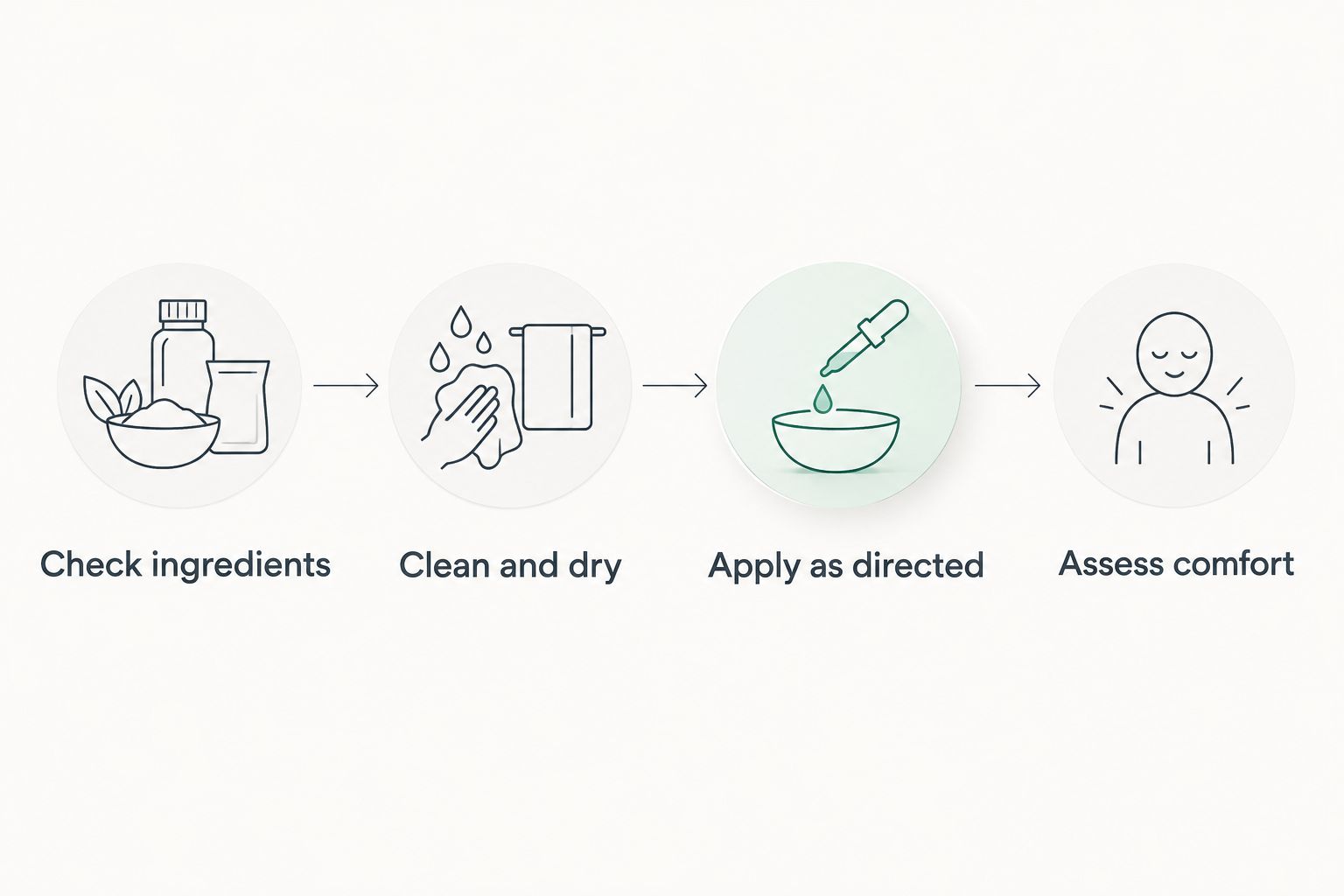
Make 3 checks before keeping a new deodorant in your routine: comfortable skin, acceptable odour control, and manageable residue. These are decision criteria, not a promise that a product will achieve a particular duration of protection.
Keep cleansing and deodorising separate. Feuerstein Essentials natural skincare can sit alongside your chosen deodorant; the Shower & Bath page is a separate body-care reference, not an aluminium-free deodorant recommendation.
What aluminium-free does—and does not—mean
Aluminium-free deodorant and antiperspirant are different choices. Deodorants address body odour, while aluminium-salt antiperspirants reduce sweating. If wet patches are your main problem, do not judge a deodorant solely by how dry it keeps your clothes.
Mineral or crystal wording also needs scrutiny. Potassium alum is an aluminium-containing salt, so a potassium-alum crystal does not meet a strict no-aluminium requirement. Natural origin and aluminium content answer different questions.
For 2026 shopping, keep safety claims separate from personal preferences. Choosing an aluminium-free formula does not require claiming that every aluminium-containing antiperspirant is unsafe. Your preference is enough; the useful task is finding a suitable product.
Nor does an unpleasant reaction prove that your skin is undergoing a beneficial detox. Burning and persistent redness are reasons to stop and reassess, not signs that you should keep applying the same formula. Seek medical advice for persistent or severe symptoms.
Which natural deodorant should you choose?
Start with a fragrance-free, baking-soda-free natural deodorant, then choose the format you prefer. That is the clearest default for an undecided reader because it separates ingredient selection from packaging.
Choose a stick for hands-free application, a cream for manual control, a roll-on for a familiar liquid routine, or a pump spray to avoid applicator friction. None of those formats makes ingredient checks optional.
Keep your 2026 body-care decisions specific. Feuerstein Essentials belongs on a shortlist for Swiss-made natural skincare with Engadine herbal ingredients; a deodorant belongs on your shortlist only when its own formula meets your requirements.
FAQ
What's the best naturdeo ohne aluminium for a first purchase?
Start with a fragrance-free, baking-soda-free natural deodorant if skin comfort is your priority. Then choose a stick, cream, roll-on or spray according to how you prefer to apply it, and check the complete ingredient list.
Will natural deodorant stop me sweating?
An aluminium-free deodorant does not provide the sweat-reducing action of an aluminium-salt antiperspirant. Evaluate it for odour control rather than expecting dry underarms.
Is crystal deodorant aluminium-free?
A crystal deodorant made with potassium alum is not aluminium-free. Potassium alum is an aluminium-containing salt, regardless of mineral or natural wording on the packaging.
Is baking soda always bad in deodorant?
Baking soda is not automatically unsuitable for everyone, but it can irritate some people's skin. If a sodium-bicarbonate formula causes discomfort, stop using it and consider a baking-soda-free option.
Is fragrance-free deodorant the same as unscented deodorant?
Do not treat fragrance-free and unscented wording as interchangeable. An unscented product can include ingredients used to mask odour, so check the ingredient list rather than relying on how the product smells.
Can I apply natural deodorant immediately after shaving?
Avoid applying a formula that stings to freshly shaved or irritated skin. Follow the product directions, and allow irritated skin to recover rather than repeatedly testing it with deodorant.
Do my underarms need a detox when switching deodorants?
You do not need an underarm detox to switch deodorants. Burning, itching or persistent redness should prompt you to stop and reassess the product, not continue because of a detox claim.
One last thing
Your favourite scent is not necessarily your best deodorant. If you use scented body care, a fragrance-free deodorant lets you choose underarm care without adding another perfume to the routine.
Before your next purchase, photograph the ingredient list of the deodorant you already tolerate. Use it as a comparison reference. That gives your next decision a firmer basis than the words natural, mineral or botanical on the front label.


